
Hiking Bosnia: Why Sutjeska NP Is Better With a Local Guide
TL;DR Sutjeska National Park is Bosnia's most rewarding hiking destination, home to Maglić (2,386m), Perućica primeval forest, and the glacial Trnovačko Lake. Perućica forest can only be entered with a licensed guide, by law. This isn't optional. The hike to Skakavac waterfall drops from 1306m to 880m, with the steepest stretch right before the waterfall, and takes around 3.5 to 4 hours round trip. The Trnovačko Lake trail descends from 1668m into a valley around 1100m before climbing back to the lake at 1520m, roughly 5.5km one way. Bears live in the park but sightings are rare, and there have been no hiker incidents in at least the last 20 years. If you've typed "hiking Bosnia" into a search bar, chances are you've already come across photos of a heart-shaped lake tucked between mountain peaks, or a waterfall buried so deep in forest it barely sees sunlight. That's Sutjeska National Park. It's the reason most serious hikers end up in this corner of the country, and it's where we've been guiding people since 2017. This isn't a flat, paved nature walk. It's real mountain terrain, with real elevation changes, real wildlife, and trails that aren't always where a map says they should be (assuming you can find a map at all). Here's what you need to know before you go, and why most people are better off hiking it with someone who already knows the ground.
Table of Contents
- What Makes Hiking in Bosnia Different From Other Balkan Destinations?
- Why You're Better Off Hiking Bosnia With a Local Guide
- The Two Hikes Worth Planning Your Trip Around
- What to Know Before You Go Hiking in Bosnia
What Makes Hiking in Bosnia Different From Other Balkan Destinations?
Sutjeska is Bosnia and Herzegovina's oldest and largest national park, and it packs an unusual amount of variety into one place. Within its borders you'll find Maglić, the country's highest peak at 2,386 metres, Perućica, one of the last primeval forests left in Europe, and the glacial Trnovačko Lake sitting right on the border with Montenegro. What sets it apart from other hiking destinations in the Balkans is how wild it still feels. The forest hasn't been logged. Trails aren't lined with signage every hundred metres. You're sharing the mountain with bears, wolves, and wild boar, not crowds. For some people that's the whole appeal. For others, it's a reason to bring someone along who's done this a hundred times before. AllTrails data confirms Sutjeska as the most popular hiking park in the country, with trails rated across all difficulty levels, yet the park remains largely unknown to mainstream European tourism.
Perucica primeval forest is a strictly protected nature reserve. Entry without a licensed guide is not permitted under Bosnian national park law. This applies to every visitor, regardless of hiking experience. If you're planning to hike Perućica, a guide isn't an add-on. It's a requirement.
Why You're Better Off Hiking Bosnia With a Local Guide
One independent traveler who spent several days exploring Sutjeska put it plainly: hiking maps aren't available anywhere in the park, and even locals can usually only point you in a general direction. Another visitor described Perućica as forest nearly impossible to navigate without someone who already knows the route. These aren't edge cases. They're the standard experience for first-time visitors to the park. Beyond navigation, a guide changes how you handle the parts of hiking that catch people off guard: Route-finding. Trails branch, fade, or get overgrown by midsummer. A guide who walks the same paths weekly knows where they actually go. Wildlife encounters. Knowing how to read the environment and how to behave around wildlife matters more than most people expect. Pacing. Families with children, mixed fitness levels, and first-time hikers all need a different rhythm. A guide adjusts on the fly, rather than forcing everyone to keep up or fall behind. In our experience, the most useful thing we do before the hike even starts is answer questions. Which trail suits your group? How hard is the steepest section, honestly? What should you actually bring? We end up functioning like a small local info center, not just a guiding service. Our about us page covers our certifications and guiding background if you want to know more about who's leading the trail.
The Two Hikes Worth Planning Your Trip Around
.webp)
Sutjeska has more trails than most visitors realise, but two routes stand out for the quality of what you see versus the effort involved: the hike through Perućica forest to Skakavac waterfall, and the mountain trail to Trnovačko Lake. They're different experiences, suit different types of groups, and can be done on separate days from the same base.
What to Know Before You Go Hiking in Bosnia
Wildlife. Sutjeska sits within one of the larger brown bear ranges left in Europe, and the wider Balkan bear population has been growing in recent years. Sightings on trail are rare, and there have been no incidents with hikers in the park in at least the last 20 years. You're more likely to spot foxes, rabbits, wild boar, or mountain goats. Mosquitoes are heavy in the mountain meadows between June and September. Bring repellent. Gear. Pack for real mountain conditions: -Sturdy hiking shoes or boots -A rain jacket (weather shifts fast at altitude) -At least one litre of water -A snack (food is not included on one-day tours) -A change of clothes and a towel -Cash in euros or BAM (card payment is not available) The most common mistake. People arrive expecting a managed park path and find real wilderness instead. Insects, uneven terrain, and wild animals are part of hiking in Sutjeska, not surprises. Come prepared for nature, not a resort walk, and the experience is completely different. Booking. You can book a guided hiking tour through WhatsApp or email. WhatsApp is faster. Once confirmed, you'll get pre-trip information on what to bring and where to meet, usually at our basecamp in Tjentište, or via organised pickup for larger groups. Our trip preparation guide covers the full logistics if you want to plan ahead.
Hiking to Trnovačko Lake: The Valley Dip That Catches People Off Guard
he Trnovačko Lake trail starts at Prijevor saddle at 1668 metres, drops into a valley sitting around 1100 metres, then climbs back up to the lake at 1520 metres. That shape catches some hikers off guard. You spend the middle section of the hike losing elevation, only to earn most of it back right before you reach the lake. The trail covers about 5.5km from Prijevor, takes roughly 1.5 hours at a medium pace, and up to 2 hours if you're taking it slower. It's not a technical climb, but the back-and-forth elevation profile makes it more demanding than the numbers alone suggest. We had a family come through with a younger child who slowed down partway along the trail. Rather than push the original plan, we trimmed the route slightly and redirected the group to a viewpoint that turned out to be the highlight of the whole day. Everyone finished satisfied, and they spent more time at the top than they would have if we'd rushed the rest of the trail. The Trnovačko Lake hike runs as a half-day tour (4 to 6 hours total), priced at 65€ / 130 BAM, with family and group discounts available for larger parties. National park entry tax, transport, and an English-speaking guide are included. Food is not.
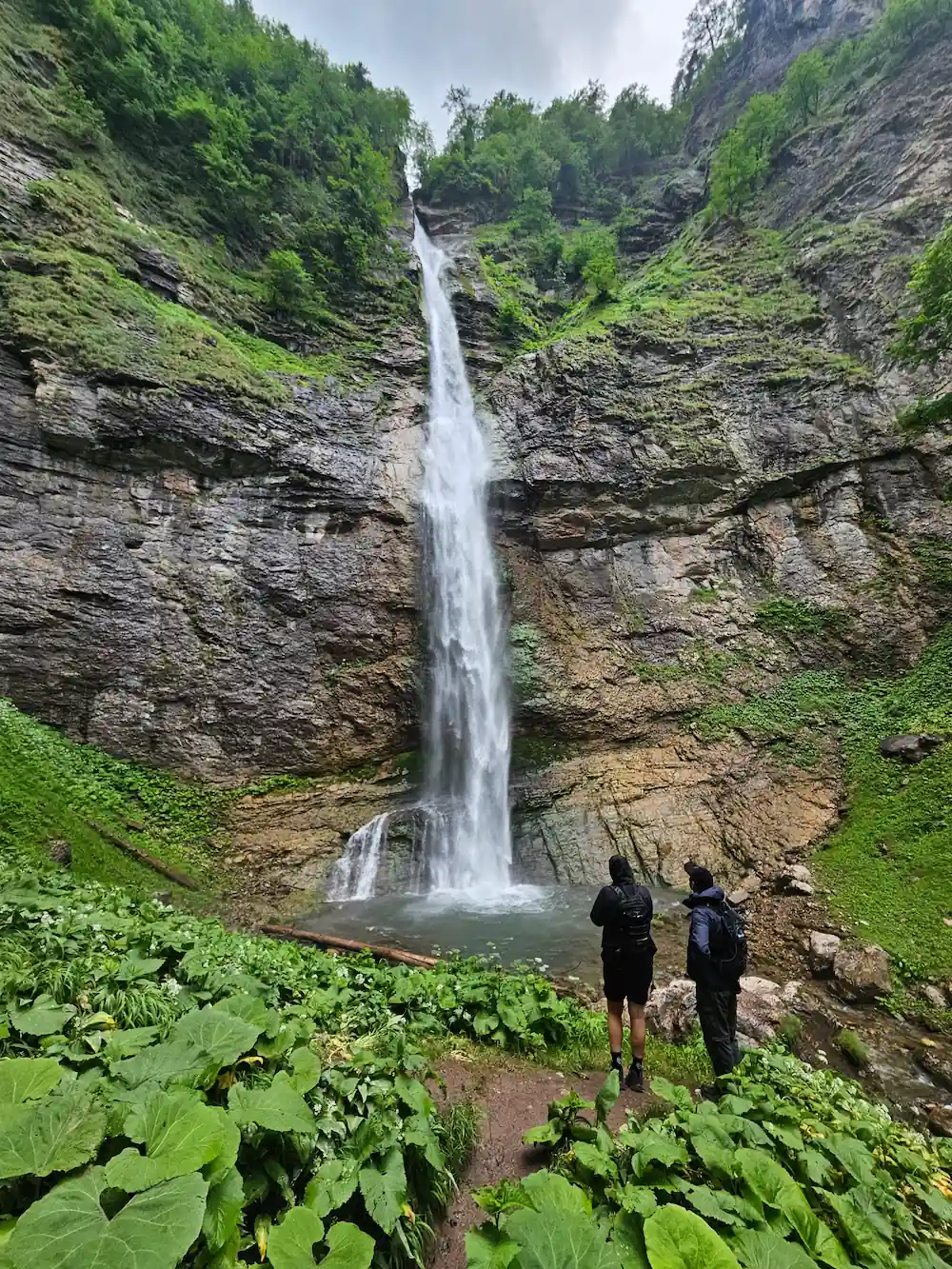
Hiking Perućica to Skakavac Waterfall: What the Trail Actually Looks Like
The Perućica forest hike starts at 1306 metres and descends to Skakavac waterfall at 880 metres. For most of the route it's a steady downhill walk through old-growth forest, trees that have been standing for centuries, with a canopy dense enough to block most of the sky. Then, on the final stretch before the waterfall, the trail steepens noticeably. That last push is where people who haven't managed their energy well start to feel it in their knees. The full route covers roughly 5km round trip, with a total ascent of 1.38km and a total descent of 2.5km. The descent-heavy profile means the way down is relatively comfortable, but the way back demands more. Going down to the waterfall takes around 1.5 hours. The return climb takes closer to 2 hours, depending on group pace. The tour runs at 65€ / 130 BAM and includes the national park entry tax, transport, and an English-speaking guide. Food is not included, so bring a snack for the trail.